2026-09-09
Smart LASIK? SMILE LASIK?
Understand the differences between Smart LASIK and SMILE LASIK, exploring lenticule extraction, 4MHz low-energy lasers, 7D eye tracking, and cyclotorsion compensation.
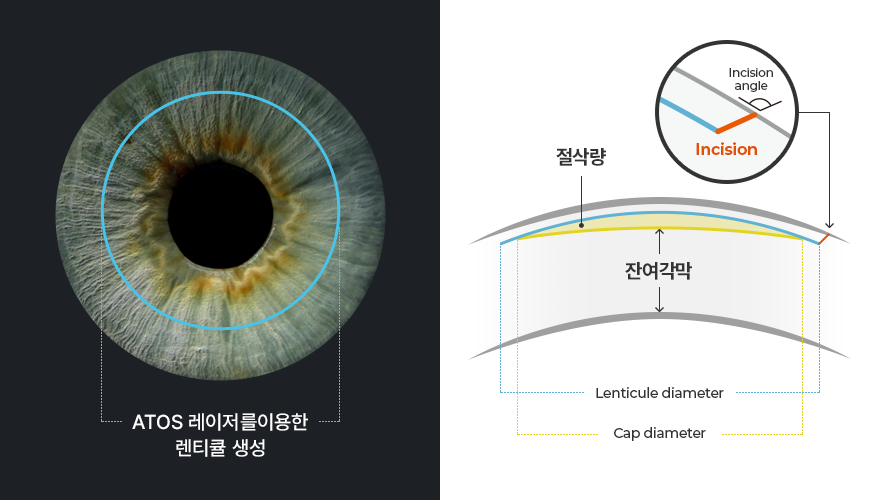
From LASIK and LASEK to SMILE LASIK.
When researching vision correction surgery,
names like "Smart LASIK" or "Smart SMILE LASIK"
have recently become mainstream,
and you are likely to come across them often.

However, when looking into it further, questions naturally arise.
What is the difference between SMILE LASIK and Smart LASIK?
Is Smart LASIK a completely different procedure from conventional SMILE LASIK?
To answer these questions, Gangnam Grand Eye Clinic
will walk you through everything step by step—from the basic principles and differences from SMILE
to the key technologies
behind Smart LASIK.
Smart LASIK shares the same basic principle as SMILE.
LASIK creates a corneal flap; LASEK removes the surface epithelial layer; SMILE extracts an intrastromal lenticule.
To understand Smart LASIK,
you first need to know how SMILE LASIK works.
LASIK creates a thin flap on the cornea
and reshapes the corneal tissue underneath using an excimer laser,
while LASEK removes the corneal epithelium before reshaping the cornea.
In contrast, SMILE-type vision correction procedures work differently.
Instead of creating a large opening on the corneal surface,
a small piece of corneal tissue called a "lenticule"
is created inside the cornea
and then extracted through a tiny incision.
Smart LASIK is also based on this lenticule extraction method.
Ultimately, you can think of Smart LASIK
as an evolved form of SMILE LASIK.
What makes 5th-generation LASIK,
Smart LASIK, even better?
① 4MHz High-Speed Laser
Smart LASIK, performed with the SCHWIND ATOS system,
features an ultra-fast laser repetition rate
of up to 4MHz.
A fast laser pulse rate is a crucial technological factor
directly tied to the efficiency of lenticule formation.
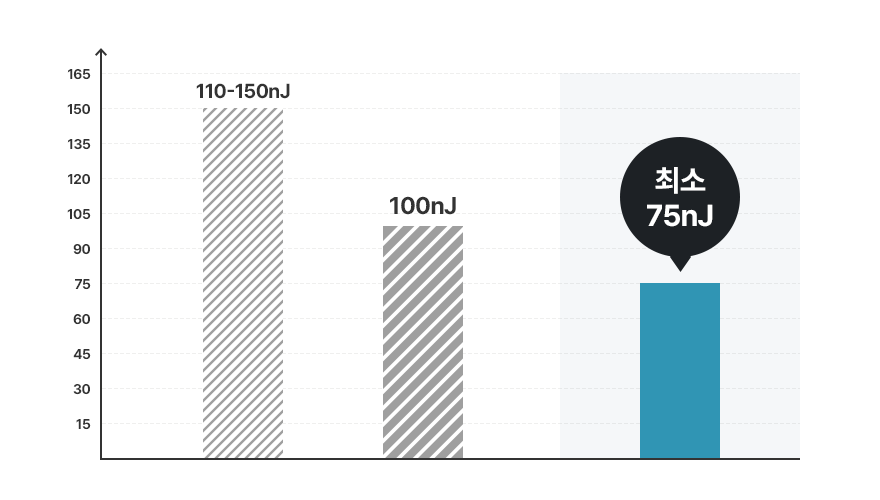
② Low Energy Laser
Smart LASIK is characterized not only by high-speed laser delivery
but also by its application of
low pulse energy.
Rather than simply focusing on being "fast,"