2026-09-24
Check This Before Reading Gangnam Station LASIK Reviews! [Differences Between LASIK and Smart NOVA]
Comparing Gangnam Station LASIK reviews? Discover the essential differences between conventional flap-based LASIK and flapless Smart NOVA (SMILE) with CenTrax centration compensation.
![Check This Before Reading Gangnam Station LASIK Reviews! [Differences Between LASIK and Smart NOVA]](/uploads/rmfosem3620/224420714551/814948c201515c43.jpg)
When starting to look into vision correction surgery,
many people wonder about what their vision will be like after LASIK,
where they should get the procedure, and more,
leading them to search for LASIK reviews around Gangnam Station!
However, beyond being curious about real patient experiences—
such as how soon clear vision returns,
how much pain to expect,
and whether going to work the next day is possible—
you might find yourself confused by the surprisingly wide variety of LASIK procedures when searching for Gangnam eye clinics or reviews.

From well-known traditional
LASIK and LASEK
to SMILE-based surgeries, and recently names like Smart LASIK
or Smart NOVA, there are many options.
In particular, while both conventional LASIK and Smart NOVA
are vision correction procedures,
they differ fundamentally in how they access the cornea.
Therefore, if you are looking into Gangnam Station LASIK reviews,
before merely comparing prices or testimonials,
it is best to understand how each method corrects vision.
Today, we will explain the differences between conventional LASIK and Smart NOVA, which has been gaining significant attention lately, in the simplest way possible.
How does LASIK correct vision?
LASIK is a representative vision correction surgery that has been performed for a long time.
In conventional LASIK, a thin corneal flap is first created
on the surface of the cornea.
This flap is opened, and an excimer laser is applied to the inner cornea
to correct myopia or astigmatism.
After reshaping the cornea as needed,
the flap is repositioned back into place.
One of the most well-known advantages of LASIK
is its relatively rapid vision recovery.
Because initial post-operative discomfort is comparatively low
and recovery is fast,
many office workers researching Gangnam Station LASIK reviews
tend to consider LASIK as their first choice.
However, because conventional LASIK
requires creating a corneal flap,
it is essential to thoroughly evaluate corneal thickness, shape,
and the estimated ablation amount prior to surgery.
Smart NOVA differs in its surgical approach from LASIK
When searching for Gangnam Station LASIK reviews,
you may see the term 'LASIK' used alongside Smart NOVA,
but its surgical principles are entirely different from conventional LASIK.
Instead of creating and opening a corneal flap,
it forms a thin disc-shaped tissue called a lenticule inside the cornea,
which is then removed through a tiny micro-incision.
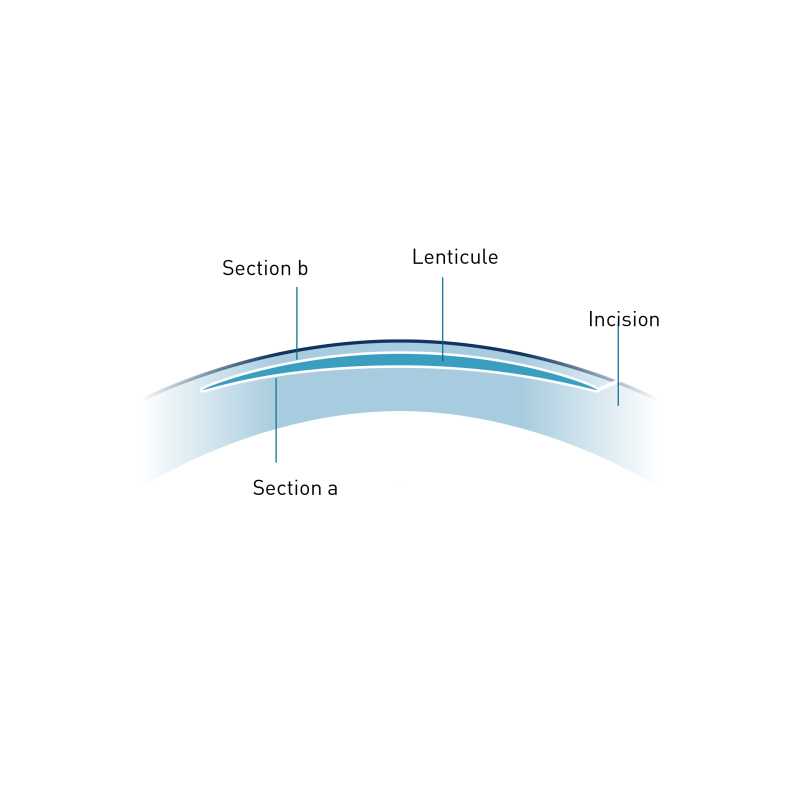

To put it simply:
LASIK → Opens a corneal flap and reshapes with a laser
Smart NOVA → No flap; creates a lenticule inside the cornea and removes it via a micro-incision (= SMILE-type procedure!)
Understanding this fundamental difference makes it much clearer.

(Smart NOVA equipment clearly displays the 'NOVA' mark!)
Smart NOVA utilizes
the SmartSight NOVA technique based on the ATOS laser platform from Germany's SCHWIND.
In other words, rather than simply being a 'new marketing name for LASIK,'
it is a SMILE-based vision correction method that approaches the cornea in an entirely different way.
What is the CenTrax System in Smart NOVA?
When comparing Gangnam Station LASIK with Smart NOVA,
one critical feature you should definitely look into
is the CenTrax system.
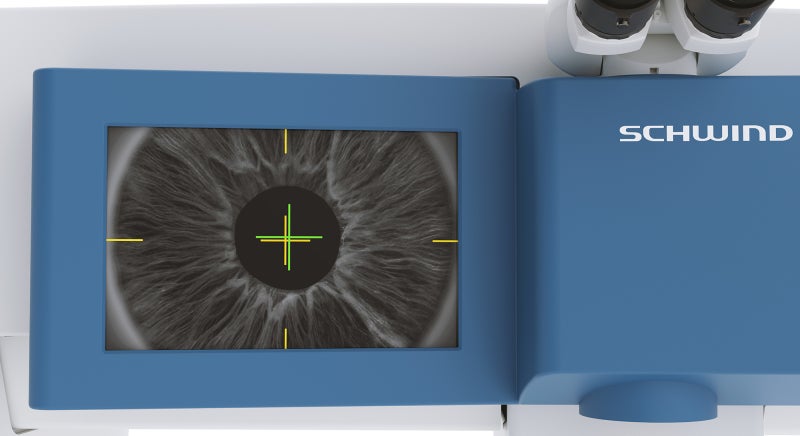
In refractive surgery, simply inputting your degree
of myopia or astigmatism and firing the laser
is not all that matters.
The position of the eye can change slightly between sitting during examination
and lying down on the operating table,
and subtle cyclotorsion (rotational movement) can occur
as you lie down.
Because astigmatism requires correction along a specific directional axis,
precisely compensating for this rotation
is vital for optimal results.
Smart NOVA features CenTrax,
which identifies the center and position of the eye
and helps compensate for minute positional discrepancies
and rotational misalignment that can occur during surgery.
Thus, the core advantage of Smart NOVA
is not simply 'faster laser speed,'
but the integrated process of verifying the eye's position → aligning the center
→ and performing precision correction while accounting for movement and cyclotorsion.
Can Smart NOVA correct astigmatism?
While correcting myopia mainly involves refocusing light
that lands in front of the retina,
astigmatism is an issue where the refractive power of the eye
differs across different meridians.
Therefore, astigmatism correction requires not only the right refractive power
but also precise alignment with the astigmatic axis.
When a patient moves from an upright diagnostic posture to a supine position on the surgical bed,
subtle rotational movement of the eyeball can happen.
Because Smart NOVA incorporates a system designed
to compensate for this ocular torsion and centration,
it is an essential factor to examine
for individuals with astigmatism comparing surgical techniques.
Conventional LASIK vs. Smart NOVA: A Quick Comparison
While the terminology might seem complicated initially, the core differences are straightforward when summarized side by side.
Category | LASIK | Smart NOVA |
Surgical Method | Laser ablation after creating a corneal flap | Lenticule creation and extraction via micro-incision |
Corneal Flap | Present | None |
Correction Laser | Excimer laser centered | Femtosecond laser based |
Incision Type | Relatively wide circular flap | Tiny micro-incision |
Recovery Characteristics | Rapid visual recovery | Rapid visual recovery with fast return to daily activities |
Centration & Torsion Compensation | Varies depending on equipment used | CenTrax-based centration & cyclotorsion compensation |
Key Features | Extensive clinical history and swift recovery | Flapless approach with sophisticated centration control |
Looking at the table makes the differences between the two procedures
much more distinct.
Does newer technology always mean it is better for everyone?

There is an important caveat here.
Just because an equipment platform is recent
does not mean it is universally the best procedure for every patient.
In the past, even with sufficient corneal thickness, patients with high astigmatism
were often guided toward LASEK.
However, Smart NOVA uses a lenticule extraction method
that eliminates flap creation and can effectively address astigmatism,
offering the benefit of a rapid recovery.
The most important message for anyone reading this
and browsing Gangnam Station LASIK reviews is to ask:
'Which method is best suited for my unique eyes?'
Because ocular anatomy varies widely from person to person,
recovery experiences and post-operative sensations
can differ significantly even with the same surgical technique.
When evaluating clinics alongside patient reviews,
we recommend checking the following points:
First, verify whether the diagnostic process goes beyond basic visual acuity and refractive error
to thoroughly evaluate corneal thickness, corneal topography, astigmatism, pupil diameter, and dry eye conditions.
Second, ensure that instead of recommending a single specific procedure,
the clinic clearly explains the pros and cons among various options—such as LASIK, LASEK, and ICL (implantable collamer lens)—based on your comprehensive test results.
If you are considering Smart NOVA, do not stop at confirming whether they 'offer Smart NOVA.' Ask during your consultation which exact device is used, how compensation systems like CenTrax are implemented,
and whether it is genuine NOVA equipment.
Gangnam Station LASIK: What to Prioritize Over Cost
Searching for LASIK around Gangnam Station yields countless price-comparison posts.
While cost is undoubtedly an important factor
when choosing a clinic, vision correction surgery
delivers long-lasting outcomes, making it ill-advised to decide based solely on price.
Confirm whether the pre-operative examinations are exhaustive,
whether medical specialists directly explain your eye conditions,
and whether they clearly distinguish between procedures suitable
and unsuitable for your eyes.
It is also helpful to check in advance
how post-operative follow-up visits and long-term care plans are managed.
Key Takeaways Before Reading Gangnam Station LASIK Reviews

In summary, while both LASIK and Smart NOVA
are refractive surgeries designed to correct myopia and astigmatism,
their surgical mechanisms are fundamentally different.
LASIK involves creating a corneal flap
and reshaping corneal tissue with an excimer laser,
whereas Smart NOVA avoids flap creation entirely,
forming a lenticule that is removed through a micro-incision.
Additionally, Smart NOVA incorporates CenTrax
to actively account for eye centration and cyclotorsion.
For this reason, patients with astigmatism
or those who prefer a flapless procedure may find it advantageous
to compare Smart NOVA alongside conventional LASIK.
However, the most crucial step is not expecting identical results
to online Gangnam Station LASIK reviews,
but rather undergoing in-depth diagnostic screening
to accurately determine the exact state of your eyes.
Rather than narrowing your focus to just one technique,
visiting an eye clinic like ours—which offers a comprehensive spectrum of refractive procedures, including LASIK, LASEK, Contoura Vision, CLEAR SMILE LASIK, PersonalEYES, Smart NOVA, and ICL—allows you to evaluate corneal thickness, shape, degrees of myopia and astigmatism, and dry eye parameters together.
Comparing treatment avenues based on detailed data
will help you choose the most rational and fitting vision correction surgery.
If you are exploring Gangnam Station LASIK reviews,
feel free to contact our clinic anytime
to consult and schedule your comprehensive precision examination.
Frequently Asked Questions
What is the biggest difference between conventional LASIK and Smart NOVA?
The primary difference lies in whether a corneal flap is created. Conventional LASIK creates a flap on the corneal surface and ablates underlying tissue with a laser, whereas Smart NOVA is a flapless procedure that creates an intrastromal lenticule and extracts it through a tiny micro-incision.
Can patients with severe astigmatism undergo Smart NOVA?
Yes, Smart NOVA can effectively correct astigmatism. It uses the CenTrax system to compensate for subtle ocular cyclotorsion and centration shifts that occur when transitioning from a sitting to a supine position, enabling precise correction aligned with the astigmatic axis.
What role does the CenTrax system play in Smart NOVA?
CenTrax accurately aligns the visual center and compensates for micro-rotational movements of the eye. By accounting for positional shifts and torsional movements between diagnostic measurements and surgery, it ensures high laser delivery precision.
Is newer technology always the best choice for vision correction?
No, the latest surgical option is not universally ideal for every patient. Because corneal thickness, topography, degree of astigmatism, and ocular surface health vary per individual, the best procedure is the one tailored to your specific diagnostic results.
What should be prioritized over price when choosing a Gangnam eye clinic?
You should prioritize comprehensive diagnostic systems and customized specialist evaluations. Look for a clinic that thoroughly explains the benefits and trade-offs of diverse surgical options tailored to your corneal health rather than pushing a single procedure, alongside an established post-operative care program.